2026-10-06 · Miguel Santos
Preventing Secondary Damage After Minor Flooding in South Fontana
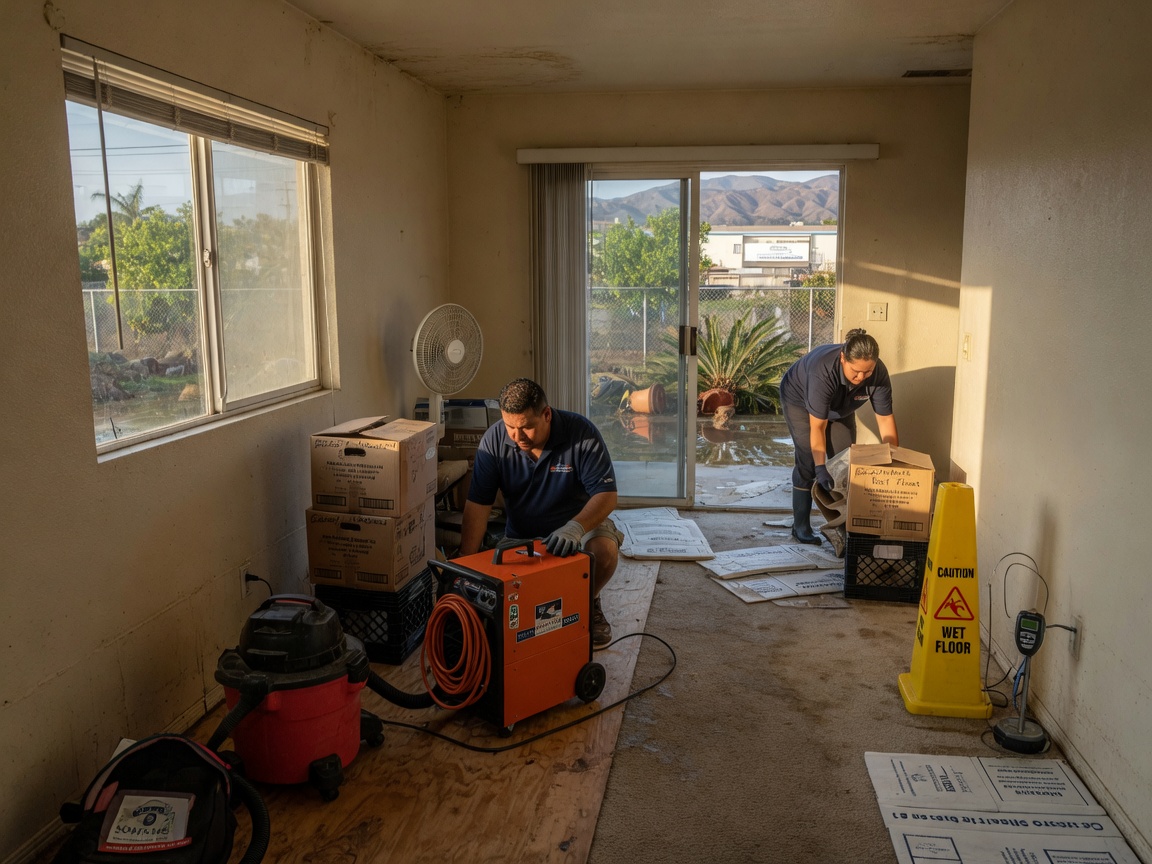
After minor flooding in South Fontana, secondary damage such as mold growth and structural warping sets in within 24 to 48 hours if standing water and moisture are not fully extracted and dried. South Fontana homes, often built on concrete slabs near the Auto Club Speedway, trap water under flooring and in wall cavities during the region's wetter winter months, making prompt action essential before humidity from the hot-summer Mediterranean climate accelerates problems.
Assessing Flood Impact in South Fontana Housing Stock
South Fontana neighborhoods contain many 1970s and 1980s tract homes with slab-on-grade foundations that allow water to migrate under tile and carpet after even small overflows from rain or appliance leaks. These properties sit in San Bernardino County where soil can hold moisture longer than in nearby Rancho Cucamonga hills. Walk the affected rooms immediately and note any discoloration on baseboards or buckling at seams. Lift small sections of flooring to inspect the subfloor for saturation rather than relying on surface appearance alone. Document water lines on walls with a marker so you can track whether levels drop during drying. This early assessment prevents hidden pockets from feeding mold colonies that later require mold remediation.
Rapid Water Extraction and Initial Containment
Remove as much water as possible within the first few hours using a wet vac or portable extractor before it soaks deeper into South Fontana's typical carpet pads and drywall. Place fans in a cross-ventilation pattern but avoid directing airflow toward unaffected rooms to limit spore spread. Block doorways with plastic sheeting and tape to contain the zone, especially in open floor plans common near Downtown Fontana. In the Mediterranean climate, afternoon heat can speed surface evaporation yet leave subsurface moisture untouched, so extraction must reach the slab level. If the source was a burst pipe or roof leak, shut off water at the meter first. Homeowners who skip thorough extraction often see secondary staining appear weeks later along the same walls.
Controlling Humidity to Stop Mold Development
Maintain indoor humidity below 50 percent during the drying phase because South Fontana summers push outdoor levels high enough to reintroduce moisture through open windows. Use a digital hygrometer in each affected room and log readings every four hours. Run commercial dehumidifiers sized for the square footage rather than household units that cannot keep up with slab moisture. Structural drying equipment placed against walls pulls water from behind baseboards where South Fontana homes commonly hide leaks. Continue this process until moisture meters read within 1 percent of unaffected drywall. Skipping this step allows mold to colonize behind cabinets and in HVAC returns within three to five days.
Inspecting for Hidden Moisture and Long-Term Checks
Probe behind toilets, under vanities, and along exterior walls with a moisture meter because South Fontana bathrooms and kitchens often share plumbing runs that leak slowly after flooding events. Check the article on checking for hidden water damage in Fontana bathrooms for room-by-room probe locations. Remove baseboards in wet zones to inspect the bottom plate and sill for rot. If readings remain elevated after 72 hours, cut small inspection holes in drywall to confirm cavity dryness. Track costs against the cost guide for water damage restoration in Fontana so you know when professional intervention becomes necessary. Consistent monitoring for two weeks after the initial event catches most secondary issues before they spread to adjacent rooms in Rialto or San Bernardino border areas.