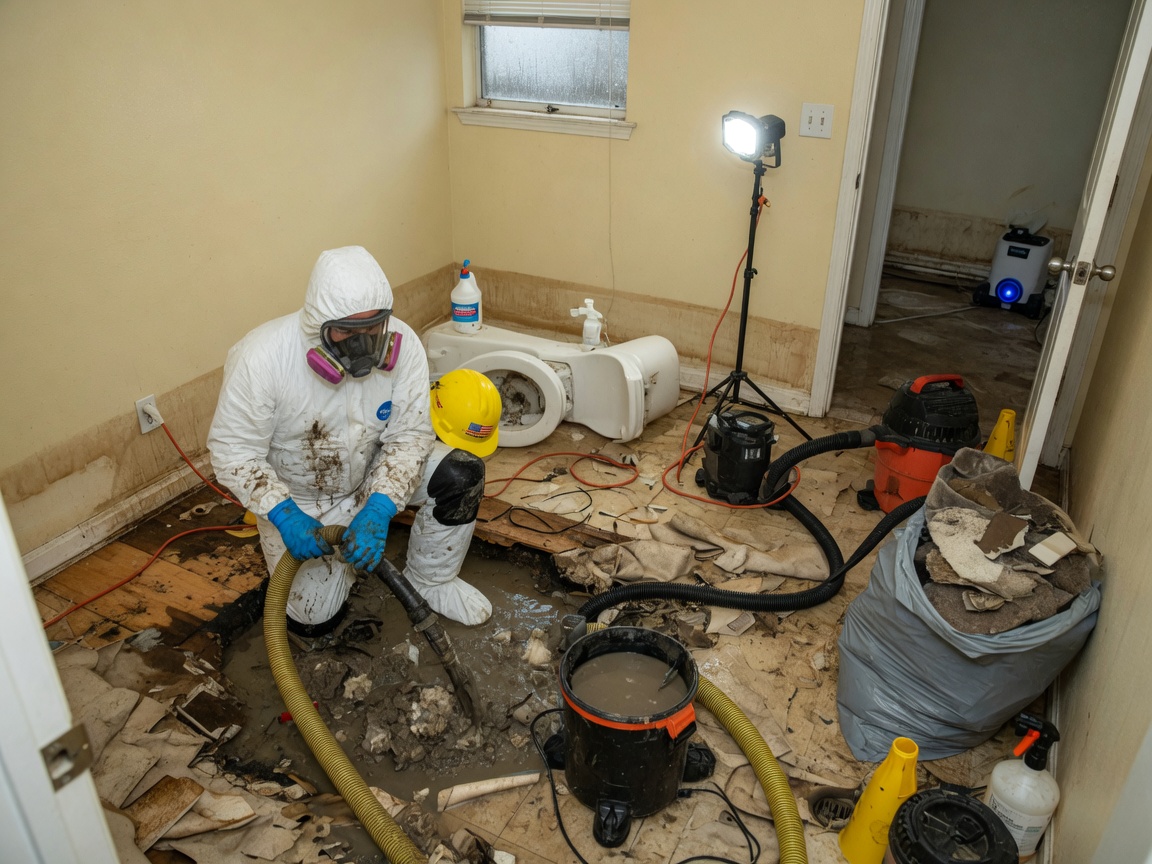
Sewage backups in Fontana often trace to aging clay sewer lines common in South Fontana and North Fontana homes built before the 1980s. When these lines crack or roots intrude, wastewater can rise through floor drains during the heavy winter rains that follow our hot-summer Mediterranean climate. Technicians must first isolate the affected plumbing to prevent further flow, then extract standing effluent before it migrates into drywall or subfloors.
Once visible water is removed, every porous material that contacted Category 3 water must be evaluated. In Downtown Fontana properties near Fontana City Hall, many basements sit below the water table, so crews install air movers and dehumidifiers sized for the square footage while monitoring moisture meters hourly. Failure to reach dry standards allows mold to bloom within 48 hours in our summer heat.
Sanitizing follows IICRC S500 protocols using hospital-grade disinfectants applied to all hard surfaces and remaining structural wood. Homes near Auto Club Speedway frequently have slab-on-grade construction, so technicians cut and remove saturated carpet padding and underlayment rather than attempting to salvage it. Final clearance testing confirms bacteria and ATP levels meet safety thresholds before reconstruction begins.
Coordination with the City of Fontana Public Works is required when backups originate from main-line failures along major corridors. Crews document the source and provide the homeowner with the report needed for any municipal claim while keeping the property secure overnight.
Technician insight
In Fontana the thing that catches most people out with Sewage Backup Cleanup is older clay sewer lines in South Fontana homes built before the big expansion. When summer heat dries the soil then winter rains hit, those lines shift and backups push right up through the slab. Homeowners often try to clean it themselves first, which spreads contamination into the subfloor and forces us to remove more material later.
North Fontana Slab Backup
A homeowner in North Fontana noticed wastewater rising through a utility room drain after heavy rain. We traced the issue to a cracked main line feeding from the street. Extraction removed 180 gallons, saturated underlayment was cut out, and the slab was treated before drying equipment ran for four days. The family returned to a dry, odor-free space without hidden mold growth.
Sewage Backup Cleanup Services We Offer
✓Basement Sewage Extraction
Removes standing wastewater from below-grade spaces common in South Fontana homes and prevents migration into adjacent living areas.
✓Floor Drain Backup Cleanup
Clears and sanitizes clogged floor drains in older North Fontana properties where root intrusion frequently causes sudden overflows.
✓Contaminated Carpet Removal
Safely extracts and disposes of saturated flooring and padding that cannot be salvaged after Category 3 water contact.
✓Structural Drying After Sewage
Deploys industrial drying equipment sized for San Bernardino County homes to reach dry standards before hidden mold develops.
✓Sewage Odor Neutralization
Applies targeted treatments to eliminate persistent odors trapped in drywall and subfloors following a backup event.
Sewage Backup Cleanup Cost in Fontana, CA
| Service | Typical Range | What Affects It |
|---|---|---|
| Initial Extraction Visit | $450–$850 | Depends on gallons removed and access difficulty in slab homes |
| Full Room Sanitization | $600–$1,200 | Includes antimicrobial application and HEPA cleaning |
| Drying Equipment Rental | $35–$75 per day | Number of air movers and dehumidifiers required |
| Contaminated Material Disposal | $200–$500 | Carpet, padding, and baseboard removal volume |
Ranges are typical for Fontana, CA and confirmed with an exact written quote before any work starts.
How it works
- 1
Initial Assessment
Technician arrives within hours, identifies the source, and maps affected zones while protecting unaffected areas of the home.
- 2
Water Extraction
Standing effluent is removed using truck-mounted equipment to limit further absorption into flooring and walls.
- 3
Sanitization
All contacted surfaces receive EPA-registered disinfectants followed by HEPA vacuuming of remaining particulates.
- 4
Drying and Monitoring
Moisture meters guide placement of air movers and dehumidifiers until readings match pre-loss conditions.
- 5
Final Clearance
Independent testing confirms bacteria levels are safe before any reconstruction work begins.
Pricing
Pricing varies by volume, affected square footage, and whether structural materials must be removed.