2026-10-06 · Miguel Santos
How to Handle Burst Pipe Water Damage in Older Fontana Neighborhoods
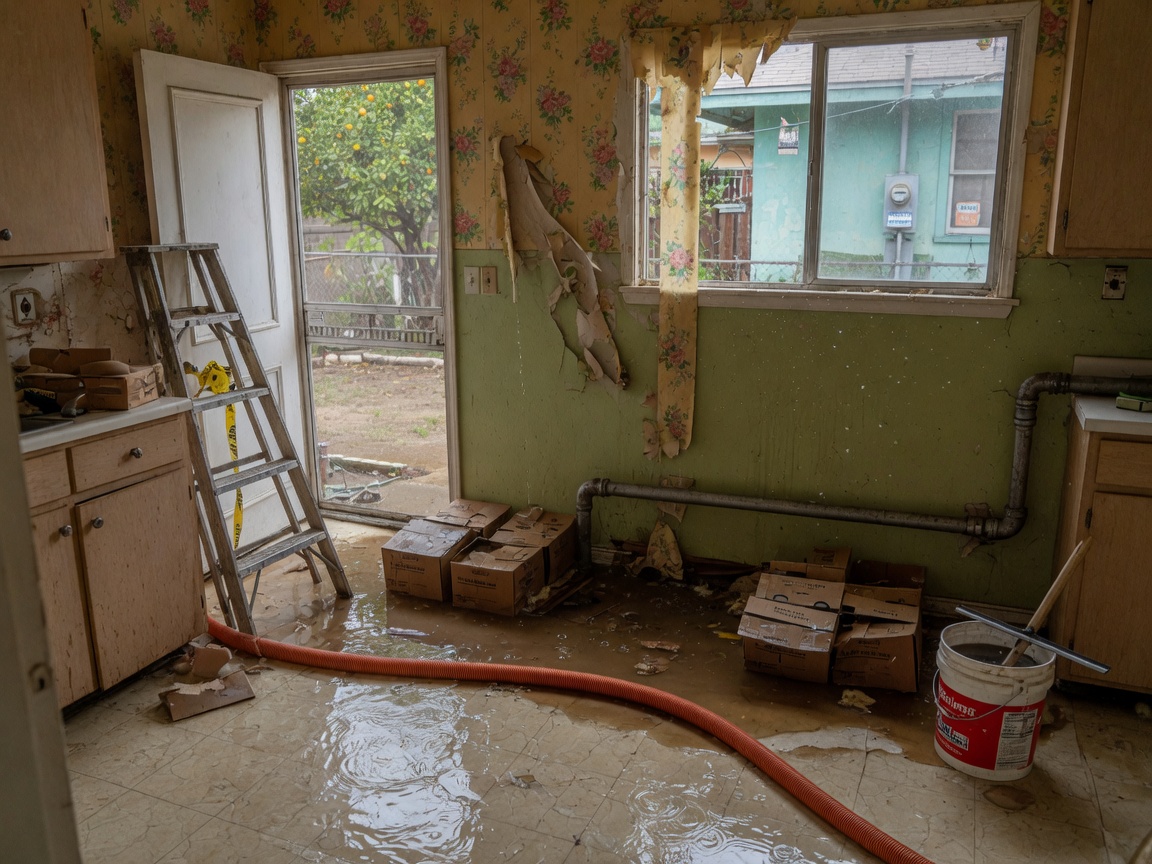
In older Fontana neighborhoods such as Downtown Fontana and South Fontana, handling burst pipe water damage begins by shutting off the main valve immediately to stop flow, then removing standing water within the first hour to protect 60- to 90-year-old wood framing that absorbs moisture rapidly under the local hot-summer Mediterranean climate.
Spotting Pipe Failures in Pre-1970 Homes
Homes built before 1970 in Downtown Fontana and North Fontana typically contain galvanized steel pipes that corrode from within after decades of mineral-rich San Bernardino County water. Look for reduced pressure at fixtures, rust-colored water, or damp drywall near bathrooms and kitchens. South Fontana properties near Fontana City Hall often sit on slightly sloped lots where water migrates toward foundations, accelerating rot in sill plates. Check crawl spaces after any pressure drop, because leaks here stay hidden until floors soften. Seasonal temperature swings, even without freezing, stress joints in these older systems more than in newer Rancho Cucamonga builds.
First Actions After a Burst
Isolate the leak by closing the main shutoff, usually located near the front yard or in the garage. Move furniture and belongings away from affected zones before water spreads. Document the damage with photos for insurance while avoiding electrical outlets near wet areas. In San Bernardino County homes, moisture can reach subflooring within two hours during summer heat, so open windows only if outdoor humidity stays below 40 percent. Avoid DIY drying with box fans alone, as trapped moisture behind walls leads to hidden mold growth within 48 hours.
Extraction and Drying Steps
Professionals use truck-mounted extractors to pull water from carpets and padding first, then place air movers and dehumidifiers sized for the square footage. In older Fontana construction with plaster walls, moisture meters track levels in lath and studs to confirm drying reaches below 15 percent. Emergency water extraction prevents secondary damage to electrical systems common in these neighborhoods. Structural drying equipment runs continuously for three to five days, with daily checks to adjust placement around built-in cabinets typical of mid-century homes.
Addressing Hidden Moisture and Mold Risks
After extraction, infrared cameras locate residual dampness in wall cavities and under vinyl flooring found in many South Fontana properties. Water damage restoration includes removing baseboards to allow airflow and treating affected areas to inhibit mold. The county's low winter rainfall followed by sudden summer storms can re-wet partially dried materials if gutters remain clogged. Cost guide for water damage restoration in Fontana outlines variables such as square footage affected and whether hardwood versus carpet requires replacement.
Long-Term Prevention in Local Housing Stock
Replace sections of galvanized pipe with copper or PEX during repairs, focusing on runs near water heaters that serve multiple fixtures. Install automatic shutoff valves tied to leak sensors in laundry rooms, a common failure point in North Fontana ranch homes. Maintain proper grading around foundations to direct runoff away from older slabs. Burst pipe repair specialists familiar with San Bernardino County permitting can update accessible lines without full repiping when budgets limit scope.