2026-10-06 · Miguel Santos
Checking for Hidden Water Damage in Fontana Bathrooms
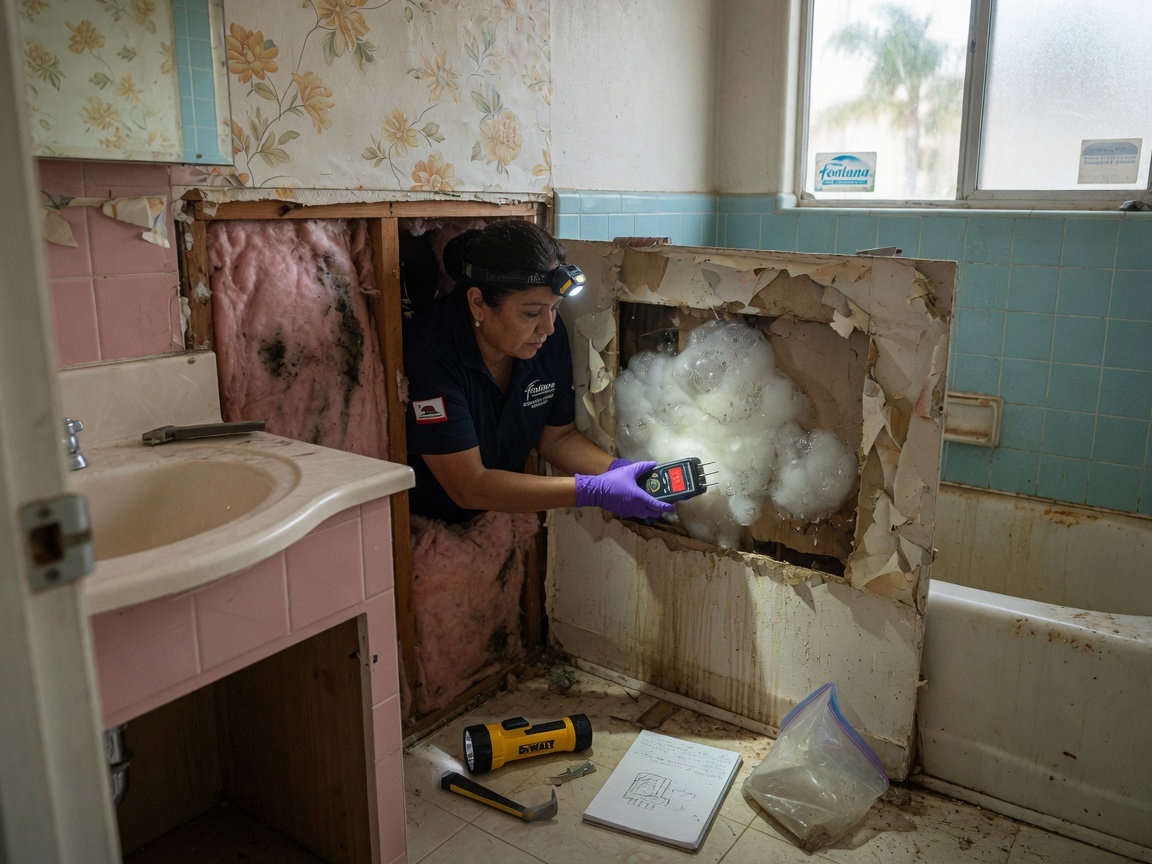
To check for hidden water damage in Fontana bathrooms, examine the subfloor around toilets and showers for softness or buckling, as these signs appear first in homes built before 1990 across South Fontana and Downtown Fontana where plumbing lines run through concrete slabs.
Visible Clues on Surfaces and Fixtures
Discoloration on drywall near baseboards or around vanities often signals leaks from supply lines or drain traps. In North Fontana homes with original copper piping, joint corrosion accelerates during summer temperature swings that reach over 100 degrees. Run a dry paper towel along caulk lines at tubs and showers; brown or yellow stains indicate seepage that has already reached the wall cavity. Check the underside of sink cabinets for warped particleboard or white mineral deposits from slow drips. These clues show up more frequently in older stock near Fontana City Hall where renovations have reused original fixtures. Pay attention to musty smells that intensify after showers because trapped moisture has no escape path in the hot-summer Mediterranean climate.
Plumbing and Layout Factors Specific to Fontana
Many bathrooms in South Fontana sit above garages or on slab foundations, so leaks travel horizontally before surfacing. Toilet supply valves and wax rings fail after 10–15 years, allowing water to migrate under tile. Shower pans without proper slope direct water toward exterior walls, especially in homes built on the slight grades near Auto Club Speedway. Hot days followed by cooler nights cause pipe expansion that loosens fittings in walls shared with laundry rooms. Residents in nearby Rialto and Rancho Cucamonga report similar patterns because the same 1950s–1970s housing tracts extend across San Bernardino County. Lifting a toilet or removing a vanity drawer reveals whether the subfloor has darkened or feels spongy.
Step-by-Step Inspection Process
Turn off water at the angle stops, then place dry towels around fixtures and run a full cycle on any nearby appliance. Return after two hours and feel for dampness on the towels or floor. Use a moisture meter on drywall 6–12 inches above the baseboard; readings above 15 percent indicate hidden saturation. Remove vent covers and shine a flashlight into wall cavities behind showers to look for rust on metal studs. In two-story homes common in North Fontana, check ceilings on the floor below for hairline cracks or water rings. Document each location with photos and notes on the date and weather conditions, since summer heat can mask slow leaks until fall rains arrive.
When Professional Assessment Becomes Necessary
If moisture readings stay elevated after 48 hours of drying or if mold spots exceed a few square inches, contact specialists for water damage restoration. Persistent odors after basic cleaning point to hidden growth that requires containment and removal, detailed further in Mold Risks After Appliance Leaks in Fontana Kitchens. Technicians with infrared cameras can locate moisture behind tile without demolition, which matters in slab homes where jackhammering creates additional dust and cost. Early intervention prevents secondary damage that spreads to adjacent bedrooms or hallways during the dry, windy periods typical after Santa Ana events.
Preventing Recurrence in Local Conditions
Re-caulk tubs and showers every 18–24 months using mildew-resistant silicone rated for high heat. Replace rubber supply lines to toilets and faucets on a five-year schedule because UV exposure through bathroom windows accelerates cracking. Ensure exhaust fans vent directly outside rather than into attics, a common shortcut in 1970s tract homes throughout San Bernardino County. Schedule annual inspections of shut-off valves before summer peaks when demand on municipal lines increases pressure. These habits reduce the chance that small leaks become structural repairs in bathrooms serving households in South Fontana and surrounding neighborhoods.