2026-10-06 · Miguel Santos
Water Damage From Roof Leaks During Santa Ana Winds in Fontana
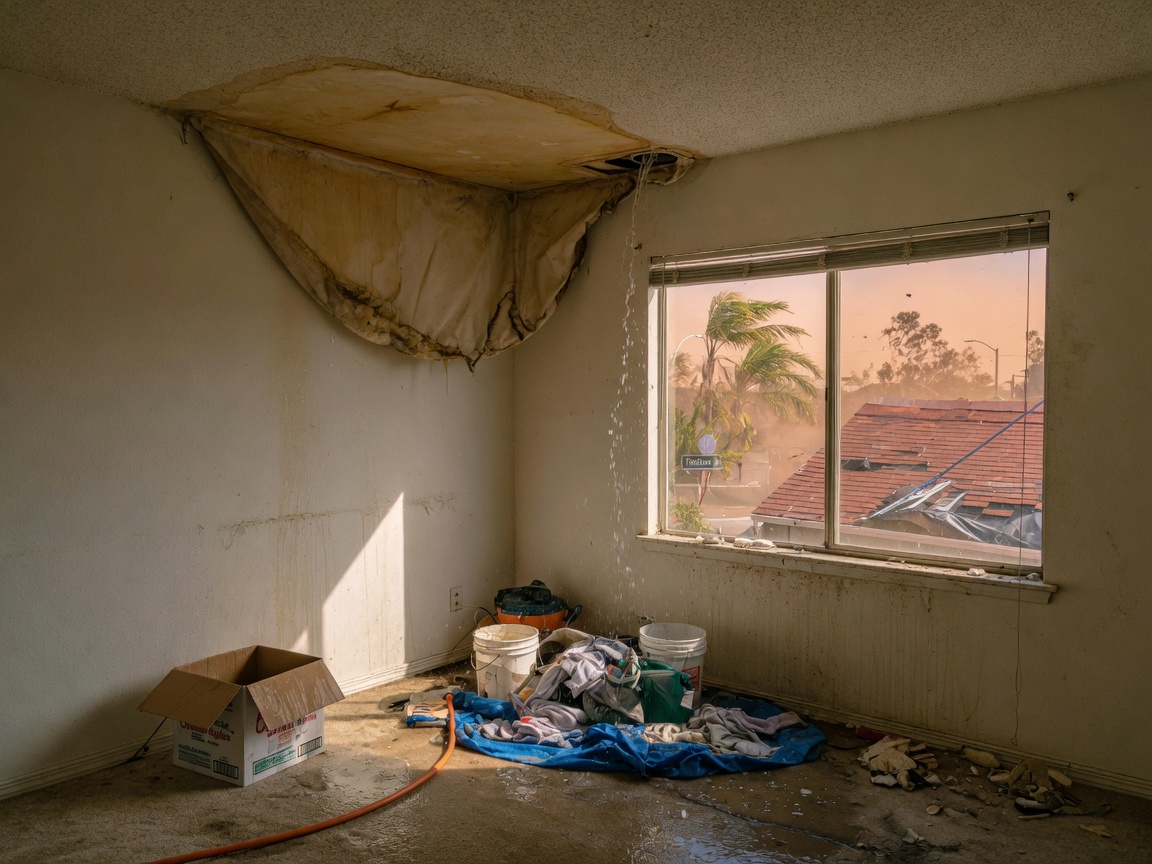
Santa Ana winds can open roof leaks and produce visible water damage inside Fontana homes within 4 to 12 hours when gusts exceed 40 mph, especially on homes built before 1990 in North Fontana and South Fontana.
How Santa Ana Winds Interact With Local Roofs
Fontana sits in San Bernardino County under a hot-summer Mediterranean climate where strong downslope winds arrive most often from October through January. These winds carry low humidity and fine dust that scours roof edges and lifts older asphalt shingles or tile. Homes near the Auto Club Speedway and along the foothills experience higher gusts than those closer to Fontana City Hall. North Fontana neighborhoods with many single-story ranch houses from the 1970s and 1980s show the most underlayment failures because original felt paper has dried and cracked. The same winds push water under flashing at chimneys and skylights faster than in calmer weather, sending moisture into attics and down wall cavities within hours.
Typical Leak Points in Downtown and South Fontana Homes
Roof leaks during Santa Ana events commonly start at ridge vents, plumbing boots, and valley flashings on homes in Downtown Fontana and South Fontana. These neighborhoods contain a mix of 1950s tract homes and later additions where roof slopes vary and create wind tunnels. Once water enters, it travels along rafters and pools above interior ceilings before staining drywall. In South Fontana, older stucco exteriors trap moisture against wood framing, raising the risk of hidden rot along top plates. Residents in nearby Rialto and Rancho Cucamonga report similar patterns because the same wind corridor crosses the area.
First Actions When Water Appears
Turn off power to affected rooms and place buckets under active drips to limit spread to lower levels. Open windows on the leeward side only after winds drop to reduce humidity inside the structure. Document the water path with photos from multiple angles before moving furniture. In San Bernardino County homes, attic insulation often holds several gallons of water per square foot, so avoid walking on wet ceilings until they are assessed. Prompt removal of standing water prevents mold growth that can begin within 24 to 48 hours in the region's dry but warm conditions.
Drying and Repair Steps for Local Conditions
After extraction, technicians use air movers and dehumidifiers sized for the square footage and ceiling height common in Fontana tract homes. Structural drying focuses on wall cavities and attic spaces where moisture migrates along trusses. In older North Fontana homes, plaster and lath walls require longer drying times than modern drywall because they absorb and release water more slowly. Once moisture readings reach safe levels, damaged roofing sections are replaced and sealed against future wind-driven rain. Homeowners in San Bernardino and Rialto often combine this work with roof leak repair to address flashing details that failed during the wind event.
Long-Term Prevention for San Bernardino County Properties
Upgrading to wind-rated shingles and adding extra ridge venting reduces future leak risk during Santa Ana events. Annual inspections before October help catch loose tiles or dried sealant on homes in South Fontana. Properties near the foothills benefit from additional ridge straps and improved attic ventilation to equalize pressure. Residents can review related guidance on older neighborhood issues in the article How to Handle Burst Pipe Water Damage in Older Fontana Neighborhoods. For full water damage restoration after wind-driven leaks, contact the team operating 24 hours at 6188 N Kingsmill Ct Fontana, CA.